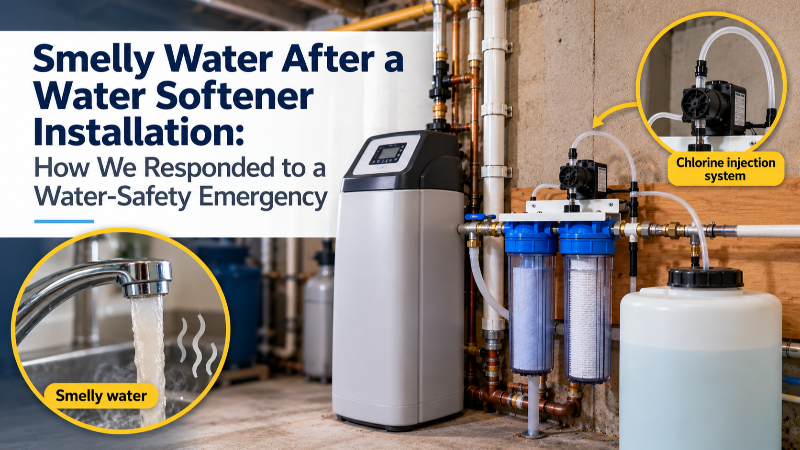
Smelly Water After a Water Softener Installation: How We Responded to a Water-Safety Emergency
When a homeowner notices smelly water, it can be tempting to assume the problem is nothing more than an unpleasant odour. But when that smell appears alongside a possible plumbing or water-treatment issue, it deserves a closer look.
That was the situation we faced after discovering one of the more serious water softener installation problems we encounter: a water softener drain connection without adequate separation from the plumbing system, which raised questions about the safety of the home's water.
We didn't want to take chances. We told the customer to stop using the water, collected a sample for advanced laboratory testing, isolated the equipment that might have been affected, and carried out a professional disinfection process. We then flushed the system, submitted another sample for testing, and waited for the results before restoring the equipment.
It took several days of urgent work, but the priority throughout was the same: address the suspected problem and establish whether the water was safe to use again.
Why We Took the Smelly Water Seriously
As we explained in Part 1, Improper Water Softener Installation: Why Drain Connections Matter, the way a water softener's drain line is connected is an important part of the installation.
Where the required drainage separation is missing or inadequate, there may be a pathway for wastewater to affect the water supply. The exact risk depends on the plumbing arrangement and the circumstances, so the presence of a sewage-like smell alone does not prove that contamination has occurred.
In this case, however, the suspected installation problem gave us a reason to investigate further instead of treating the smell as a minor nuisance.
Ontario's guidance on testing and treating private water wells explains that changes in taste, colour, or odour can signal a change in water quality. Although that guidance specifically addresses private wells, it reinforces an important point: an unusual change in water should not be ignored when there is a reason to suspect a water-quality problem.
We needed to investigate what had happened, take precautions, and use appropriate laboratory testing to help determine the next steps.
How We Handled the Water-Safety Emergency
1. We Told the Customer to Stop Using the Water
Our first step was to tell the customer to stop drinking and using the home's water.
We made that decision because we had identified a potential risk that needed to be investigated. We didn't want the household to continue using the water while the concern remained unresolved.
At this stage, we weren't relying on the smell to tell us whether the water was safe or unsafe. We were treating the suspected plumbing issue seriously while we worked to find out more.
If you notice smelly water after plumbing work, especially when there may be a problem with a drain connection, don't assume the smell will disappear on its own or that the water is safe because it looks clear. Seek appropriate professional advice and follow guidance specific to your water supply.
2. We Sent a Water Sample to an Advanced Laboratory
Next, we collected a water sample and sent it to an advanced laboratory for further diagnostics. Because the situation was urgent, we requested expedited testing.
We needed more than a visual inspection or a guess about what might be causing the odour. Laboratory testing was an important part of investigating the water-quality concern and determining what needed to happen next.
The right tests depend on the suspected problem. Ontario's guidance on testing and treating private water wells explains that different tests look for different contaminants. For example, testing for bacterial indicators does not automatically rule out chemical contaminants.
That distinction matters. No single test can be assumed to answer every possible water-quality question. Testing needs to be appropriate to the concern being investigated.
3. We Bypassed Equipment That Might Have Been Affected
While the initial sample was being assessed, we bypassed the equipment we suspected might have been affected by the inadequate drain connection.
This allowed us to isolate the suspected equipment rather than continue operating it while the issue was under investigation. Equipment that might have been contaminated or damaged was kept out of service until we could determine the appropriate next steps.
A water-treatment system is made up of components that work together, so replacing a filter or trying to cover up an odour may not address the underlying problem.
For homeowners planning to install a water softener, proper installation includes more than connecting the unit to the water lines. Drainage arrangements, equipment instructions, and applicable plumbing requirements all need to be considered.
4. We Set Up a System for Professional Chlorine Treatment
As part of our response, we installed a filter-housing arrangement that allowed us to introduce chlorine into the home's plumbing system and distribute the treated water throughout the pipes.
We left the chlorinated water in the plumbing for approximately 24 hours as part of the treatment process. This was a controlled procedure carried out for this particular situation, based on the circumstances we were dealing with.
It is important to understand that this is not a general do-it-yourself solution for smelly water. The correct disinfection method depends on the suspected problem, the water source, the plumbing configuration, and the treatment equipment involved. Incorrect chlorine concentrations or improper handling can create additional risks.
Ontario's guidance on disinfecting private water wells explains the importance of appropriate disinfection, flushing, and water testing for private well systems. That guidance is specific to private wells, so its procedures should not automatically be applied to every residential plumbing system.
In our case, the chlorine treatment formed one part of a broader response that also included equipment isolation and laboratory testing.
5. We Returned the Next Day to Flush the System and Collect Another Sample
The following day, we returned to flush the chlorine from the plumbing system. Once that stage was complete, we collected another water sample and sent it to the laboratory for expedited testing.
This follow-up was essential. Completing a disinfection procedure does not, by itself, establish that water is safe to use. We needed the results from the post-treatment sample to help assess the condition of the water after the work had been completed.
During this process, the customer had no access to the home's water. We understand how disruptive that is, especially when everyday activities depend on having running water. However, we did not want the household to resume normal water use while the concern was still being addressed.
Health Canada's guidance on residential premise plumbing pathogens and water quality discusses how water quality can change within a building's plumbing system. It provides useful context for why investigating a potential problem may involve the plumbing inside the home, rather than looking only at the original water source.
6. We Waited for the Laboratory Results Before Restoring the Equipment
We didn't consider the job complete just because the chlorine had been flushed out or the smell had changed. We needed to wait for the laboratory findings.
Once the laboratory confirmed that the water was clean and safe for human use based on the testing performed, we returned for the final stage of the work.
We reinstalled the equipment that had been removed because it was potentially affected or damaged, completing the restoration of the system.
For us, this was an important part of the process. The goal wasn't just to make the water smell better. It was to address the suspected problem, complete the treatment and testing process, and restore the equipment once the results supported doing so.
What Should You Do If Your Water Smells Like Sewage?
If you notice smelly water in your home, particularly after a water softener installation or plumbing repair, don't ignore it or assume that replacing a filter will solve the problem.
Here are some sensible steps to take:
Stop using potentially affected water. If you have reason to suspect contamination, avoid drinking or using the water until you receive appropriate advice.
Pay attention to when the smell started. Note whether it appeared after an installation, repair, change in water source, or other plumbing work.
Arrange a professional inspection. A qualified professional can examine the plumbing and drainage connections to investigate possible installation problems.
Get the water tested appropriately. The testing should match the suspected issue and the type of water supply. Private well owners in Ontario can refer to the provincial guidance on testing and treating private water wells.
Don't attempt to disinfect the system yourself without proper guidance. The correct method depends on the system and the nature of the concern.
Don't rely on the smell alone. Water that looks clear or no longer smells unusual has not necessarily been proven safe. Follow appropriate professional advice and testing recommendations before returning to normal use.
If your home uses a private well, Ontario's guidance on disinfecting private water wells provides information specific to that type of water supply. For homes using municipal water, seek advice from the appropriate water provider or public health authority when necessary.
Why the Underlying Problem Matters: Sewage Smell in Water Isn't Just an Odour Issue
Smelly water can have several causes. The odour itself doesn't tell you exactly what is wrong, and the right response depends on the evidence.
Sometimes, a water-quality concern requires further testing. In other cases, the plumbing, drainage arrangement, or water-treatment equipment may need attention. If there is a suspected installation defect, addressing only the symptom may leave the underlying issue unresolved.
That is why we look beyond the smell. Identifying the suspected source, isolating potentially affected equipment, disinfecting the plumbing system where appropriate, and relying on proper water safety testing to assess the water afterward all play a role in responding to a situation like this.
At Harris Plumbing, Wells & Drains, we work with homeowners on water-treatment equipment and related plumbing concerns, including water softener repairs.
If you're concerned about a plumbing or water-treatment problem in your home, you can contact our team through the Harris Plumbing website.
A Multi-Day Emergency, With a Clear Priority
This wasn't a one-visit repair. The work involved collecting the initial sample, isolating the suspected equipment, carrying out professional chlorine treatment, returning to flush the system, arranging follow-up testing, and finally restoring the equipment.
The customer had to go without the home's water during the process, and we know how difficult that can be. We also know that when there's a potential water-safety concern, rushing to restore normal use without addressing the problem is not the answer.
We were glad to complete the work over the course of several days and, most importantly, glad that nobody became sick.
The takeaway is simple: if your water develops an unusual smell and there is a possible plumbing or drainage defect, don't guess at the cause or rely on the smell to determine whether the water is safe. Take the concern seriously, get the problem investigated, and follow appropriate testing and professional guidance before returning to normal use.
This article describes the actions taken in one specific situation. Inspection, disinfection, and testing requirements can vary depending on the water source, plumbing system, suspected issue, and laboratory findings.