What to Do When Your Home Suddenly Has No Running Water
What to Do When Your Home Suddenly Has No Running Water
When you have no running water in house, the cause could be a municipal supply interruption, a plumbing fault, or a problem with a private well system. If your home relies on a well, the pump is only one part of the system. The pressure tank, electrical controls, waterlines, well construction, and groundwater conditions can all affect your water supply.
For homeowners in Newmarket, Ontario, the first step is to determine whether the property uses municipal water or a private well. Then, check whether the problem affects one tap or the entire home. These observations can help narrow down the possible causes and determine what needs professional investigation.
A sudden loss of water does not automatically mean your well pump has failed. Identifying the underlying problem before replacing equipment can help prevent unnecessary repairs and recurring interruptions.
Key Takeaways
Check multiple taps to determine whether the outage affects one fixture or the entire home.
If you use municipal water, check for a wider service interruption before assuming the problem is inside your property.
If you rely on a private well, possible causes include pump failure, electrical faults, pressure-system problems, damaged waterlines, and groundwater supply limitations.
Water that stops during prolonged use and returns after a rest period may indicate a well recovery issue, but other faults can produce similar symptoms.
Never open electrical control boxes, remove the well cap, or attempt to pull a submersible pump yourself.
If your well water changes colour, becomes cloudy, or develops a new odour after flooding or repairs, seek appropriate water-quality advice and testing.
Keep your well record and previous service invoices available to help a technician assess the system.
1. Check Where the Water Supply Has Failed
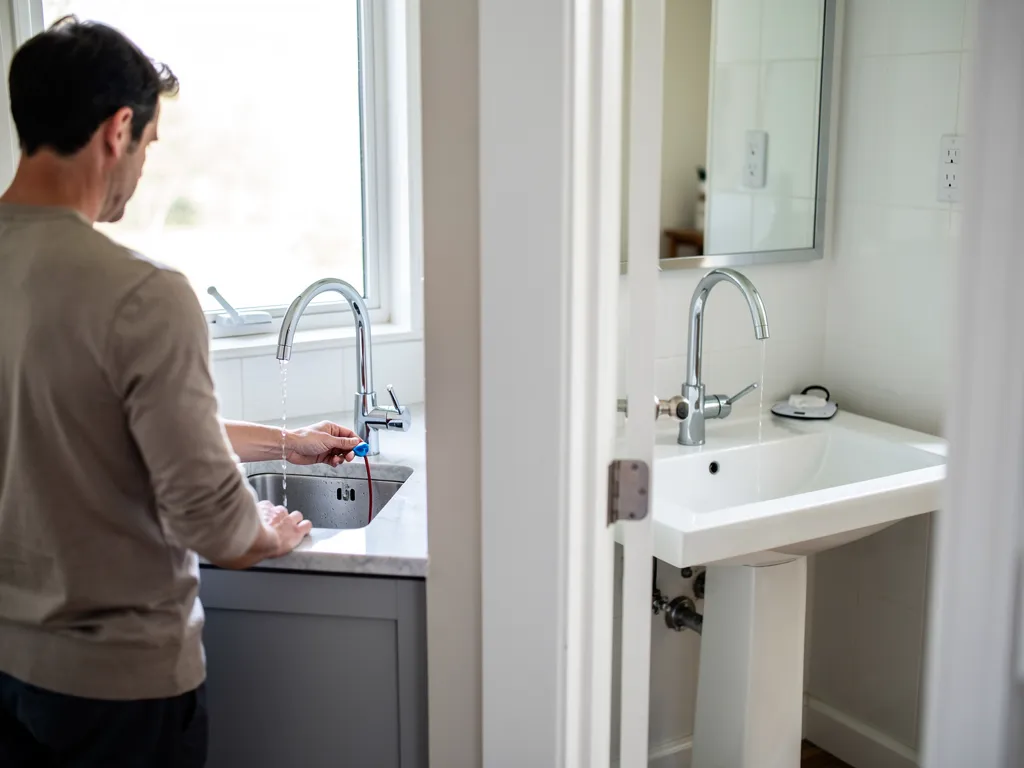
Before arranging repairs, determine whether the problem is limited to one fixture or affects the entire house.
Open a cold-water tap in the kitchen and another in a bathroom. Observe whether there is no flow, weak flow, intermittent flow, or fluctuating pressure. Avoid repeatedly operating equipment that appears to be malfunctioning.
What you observe | What it may indicate |
|---|---|
Only one tap has no water | A fixture, shutoff valve, or branch-pipe problem |
No taps have water | A municipal interruption, incoming supply issue, or private well-system fault |
Water pressure falls during prolonged use | A capacity limitation, pump problem, restriction, or leak |
Pressure repeatedly rises and falls | A pressure-control, tank, pump-cycling, or plumbing issue |
Water returns after the system rests | A possible well recovery limitation or another intermittent fault |
Water becomes cloudy or contains new sediment | A possible change in the well, plumbing, or water quality |
These observations are clues, not definitive diagnoses. For example, water returning after a rest period does not prove that groundwater levels are too low. A pump, control, or plumbing fault may produce similar symptoms.
Note when the problem started, whether it followed heavy water use or a power interruption, and whether it has happened before.
2. Determine Whether You Use Municipal Water or a Private Well
The next steps depend on how your property receives water.
If your home uses municipal water
Check whether neighbours are experiencing the same problem and look for official service notices. If nearby properties are also affected, the interruption may involve the local distribution system.
York Region provides information about its regional water system through its Municipal Water Supply resource.
If the outage appears to affect your neighbourhood, contact the relevant water authority using its current official contact information, this points to a municipal water interruption rather than a problem on your property. If neighbouring properties have water but your home does not, the issue may involve your service connection, an internal shutoff valve, or your plumbing.
A private well pump specialist may not be the appropriate first call for a municipal supply interruption.
If your home uses a private well
A private well relies on groundwater, the well's construction, and the equipment that moves water into your home.
Ontario identifies several potential sources of well-system problems, including pumps, pressure switches, electrical cables, waterlines, and groundwater conditions. Well construction and maintenance can also affect water quality and the protection of groundwater.
See Ontario's Water Supply Wells: Maintenance and Repair guidance.
If you suspect a private well problem, observe accessible equipment from a safe distance. Do not remove the well cap, handle exposed wiring, or attempt to extract the pump.
3. Understand How Groundwater Conditions Affect Your Water Supply
A private well depends on the amount of water available in the surrounding water-bearing formation and how quickly the well can replenish water during pumping.
This matters when water flows normally at first but gradually weakens or stops after showers, laundry, or other prolonged use.
Static water level, drawdown, and recovery
Three concepts help explain how a well responds to demand:
Static water level: The water level when the well is not being pumped and has returned to an appropriate resting condition.
Drawdown: The drop in water level when the pump operates.
Recovery: The rise in water level after pumping stops.
A well may contain water while resting but struggle to provide it quickly enough during periods of high demand.
For example, if the household uses water faster than the well can replenish it, the pumping water level may fall. Once water use stops, the well may recover sufficiently for the supply to return.
However, similar symptoms can result from a poorly performing pump, a control fault, a restriction, or another system problem. Water returning after a rest period is therefore not enough to identify the cause.
Ontario's Managing the Quantity of Groundwater Supplies resource explains how water levels, drawdown, and well yield help assess groundwater supply.
Why installing a larger pump may not solve the problem
A larger pump is not automatically the right solution for a well that cannot meet household demand. If the pump draws water faster than the well can sustainably supply it, the pumping water level may fall too far.
A qualified professional may need to assess the well's yield, water levels, recovery, pump performance, and household demand before recommending changes.
4. Consider the Well's Construction and Pump Installation
A reliable diagnosis may require more than inspecting the pump. The well's construction and installation influence how water enters the well and reaches the household.
Important details include:
Well type and depth: Different well designs and depths interact with groundwater in different ways.
Casing and seals: Damage or defects can allow surface water and foreign material to enter the well.
Pump intake elevation: The pump must operate within the available water column and its specified operating conditions.
Well yield and drawdown: These help establish whether the water source can support the required pumping rate.
Wellhead protection: A damaged cap, poor drainage, or other defects may create water-quality concerns.
Your well record may contain information about construction, depth, reported production, pumping tests, and other installation details. These records can provide a useful starting point for an assessment, although records may be incomplete or unavailable for some properties.
See Ontario's Water Supply Wells: Equipment Installation guidance and Well Records resource for additional information.
5. Check the Possible Causes Within the Water System
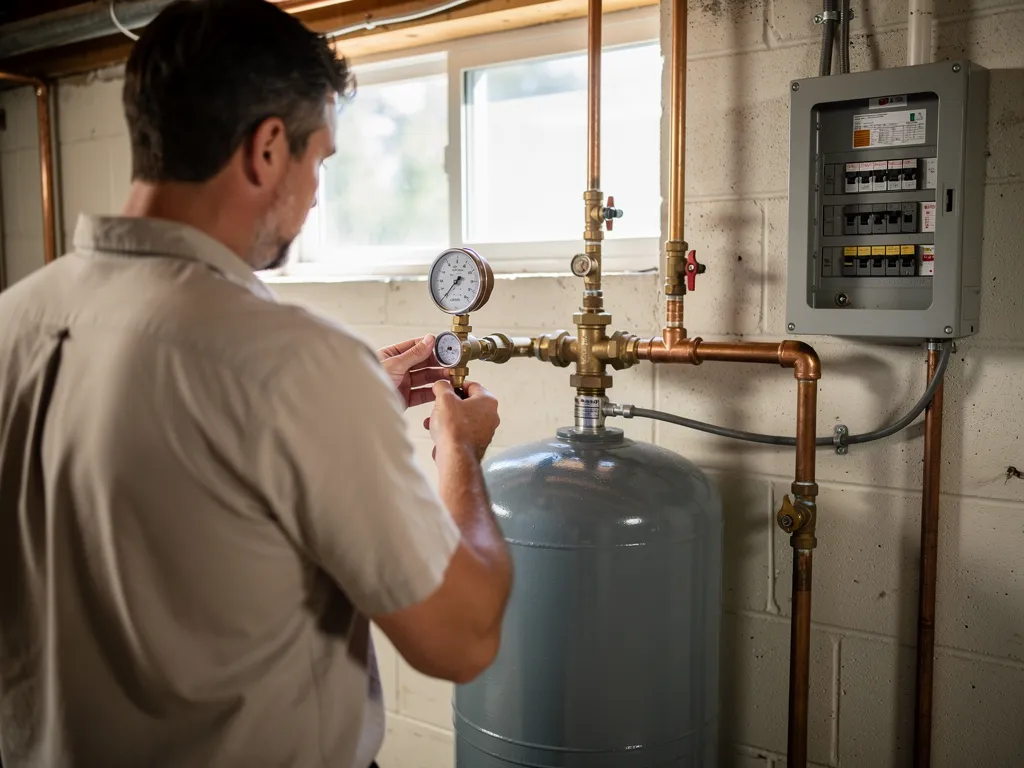
If the problem affects the whole house and the municipal supply is not interrupted, the cause is likely one of several private well pump problems, and several parts of the system may need assessment.
Well pump
The pump moves water from the well into the home's water system. A failed pump can stop the supply, but a pump that does not operate correctly may also be affected by an electrical fault, damaged cable, control problem, waterline issue, or insufficient water availability.
Pressure tank
The pressure tank helps maintain system pressure and reduces how frequently the pump starts. Problems involving the tank or associated equipment are a common source of well water pressure issues, including fluctuating pressure, rapid cycling, or inconsistent water delivery.
These symptoms do not automatically mean the tank needs replacement. The tank, pressure settings, pump behaviour, and other components may need to be evaluated together.
Pressure switch and electrical controls
The pressure switch controls pump operation in response to system pressure. A faulty switch, loss of electrical supply, damaged cable, or another control problem may prevent the pump from operating normally.
Electrical equipment can present a serious shock hazard. Do not open control boxes or attempt live electrical testing yourself.
Waterlines, valves, and leaks
Damaged waterlines, restrictions, closed valves, and leaks can interfere with water delivery. Water may be pumped from the well but fail to reach the fixtures as expected.
A proper assessment should establish whether the fault is at the water source, within the equipment, or along the plumbing system.
6. What a Professional Diagnosis Should Establish
The goal of a professional assessment is to identify the actual cause of the interruption rather than replace the first component that appears suspect.
Depending on the symptoms, the investigation may involve:
Confirming the pattern: Establish when the water stops, whether the problem is intermittent, and how water use affects it.
Checking the electrical supply and controls: Determine whether the pump receives the required power and whether its controls operate correctly.
Assessing pump and pressure-system behaviour: Evaluate pressure readings, pump cycling, and water delivery under appropriate conditions.
Inspecting accessible plumbing: Look for evidence of leaks, restrictions, and other faults.
Reviewing the well record: Consider the well's construction, reported yield, pump installation, and previous service history.
Evaluating groundwater response when necessary: Assess water levels, drawdown, recovery, and the well's ability to meet demand.
Investigating water-quality concerns: Examine potential well-integrity or contamination issues if the symptoms warrant it.
Not every case requires every step. The appropriate process depends on the installation and the evidence collected.
For applicable well construction, repair, and alteration work in Ontario, licensing requirements depend on the activity being performed. You can consult the provincial directory of licensed well contractors to check relevant qualifications.
7. Recognize When a Water Supply Problem May Also Involve Water Quality
A mechanical problem and a water-quality problem are separate concerns, although they can occur together.
Pay attention if your well water develops a new odour, changes colour, becomes unusually cloudy, or contains visible sediment, particularly after flooding, heavy rainfall, well work, or a sudden change in system operation.
A damaged well casing or poorly protected wellhead may allow surface water or foreign material to enter the well. Repairing the pump alone will not necessarily resolve contamination.
If contamination is suspected:
Use an appropriate alternative drinking-water source and seek advice from your local public health unit or relevant authority.
Arrange appropriate water testing rather than relying on appearance, smell, or taste.
Remember that Public Health Ontario's private-well testing service checks for bacterial indicators such as E. coli and total coliforms, not every possible chemical or mineral contaminant.
Follow appropriate guidance on well disinfection after relevant repairs or when contamination is suspected.
Read Ontario's guidance on Testing and Treating Private Water Wells and Disinfecting Private Water Wells.
Do not assume that adding bleach is the correct response to every water problem. The appropriate action depends on the circumstances and relevant guidance.
8. What to Do Safely Before Arranging Service
You can gather useful information without opening the well or attempting repairs.
Check multiple taps and record whether the outage affects the entire house.
Confirm whether your property uses municipal water or a private well.
If you use municipal water, check for an official service notice.
Observe accessible equipment from a safe distance, noting unusual sounds, visible leaks, or warning lights.
Record whether water stops immediately, fades during prolonged use, or returns after a rest period.
Note recent power interruptions, heavy rainfall, flooding, repairs, or changes in water quality.
Gather the well record, pump model information, and previous service invoices if available.
Avoid repeatedly resetting malfunctioning equipment. Do not remove the well cap, pull a submersible pump, adjust electrical controls, or attempt well rehabilitation yourself.
9. How to Reduce the Risk of Future Water Interruptions
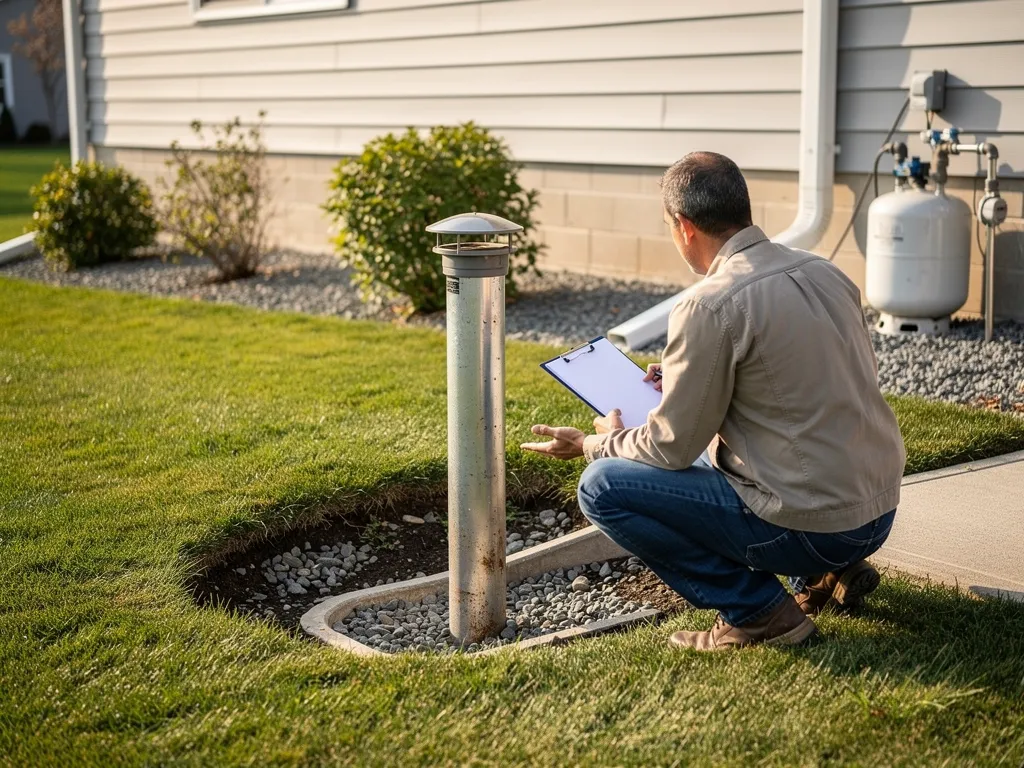
Routine observation and maintenance can help identify developing problems, although no maintenance plan can guarantee an uninterrupted supply.
For a private well:
Inspect the accessible wellhead for visible damage, a loose cap, corrosion, or pooling water.
Maintain drainage that directs surface water away from the well.
Monitor recurring pressure problems, unusual pump cycling, and changes in available water.
Keep records of water-quality tests, repairs, and relevant measurements.
Follow recommended private-well testing guidance and seek additional testing after relevant events or when water quality changes.
Investigate recurring supply limitations rather than automatically installing a larger pump.
Ontario recommends testing private-well water for bacterial indicators at least three times per year, with more frequent testing when problems are suspected or circumstances warrant it. Chemical testing addresses different concerns and may be needed depending on the well and local conditions.
For more information, see Ontario's guidance on Protecting the Quality of Groundwater Supplies and Wells on Your Property.
A Real Well Pump Repair: Why Some Diagnoses Take More Than One Visit
Some well pump problems can be identified quickly. Others require further investigation as the system is tested and possible causes are ruled out.
In one Newmarket service case, a family lost its well water entirely. Restoring the supply took more than five visits, including a Saturday evening visit from the owner himself, before the fault was confirmed: the pump motor needed replacement. Completing the repair meant returning with a crane to lift the pump assembly from the well, work that carried on late into the night before the household had water again.
The experience illustrates why identifying the actual fault matters. For this family, restoring water meant being able to do laundry, run their home, and get ready to welcome people around their dinner table again. A water interruption may have several plausible causes, and replacing a component without sufficient evidence may not restore reliable service, which is why the job doesn't end until the real cause is confirmed, not just until the first likely part is replaced.
Need Help Identifying Why Your Home Has No Running Water?
When a home's water supply suddenly stops, the right repair starts with identifying the cause. For a private well, that may involve the pump and pressure controls, but it can also require investigating the waterlines, well construction, groundwater levels, and the well's ability to meet household demand.
Harris Plumbing, Wells & Drains is a family- and veteran-owned company that has served Newmarket, Barrie, and the surrounding Simcoe County and York Region communities for more than 52 years, including Newmarket well pump service and coverage across the Barrie area. Every repair is backed by a one-year workmanship guarantee, so a diagnosis that takes more than one visit still ends with work you can trust. Contact the company to confirm service availability for your property and describe what you have observed. Details such as when the water stopped, whether it returns after a rest period, and whether the system has experienced previous problems can help guide the next steps.
Frequently Asked Questions
Can a well pump fail even if the well still contains water?
Yes. The pump or its electrical controls may fail even when water is available in the well. A damaged waterline, pressure-system problem, or inadequate water availability during pumping can also interrupt supply. A diagnosis should distinguish between equipment failure and a limitation in the well's water supply.
Why does my well water stop during heavy use and return later?
One possible explanation is that the well is being pumped faster than groundwater replenishes it. The well may recover when demand stops. However, pump performance, controls, restrictions, and plumbing faults can cause similar symptoms. Water-level and recovery measurements can help a qualified professional investigate.
Should I install a bigger pump if my well does not provide enough water?
Not without assessing the well's capacity and the pump's operating requirements. A larger pump may draw water faster than the well can sustainably supply it. Pump selection should consider well yield, drawdown, recovery, pump-intake elevation, and household demand.
What information should I give a well pump technician?
Explain when the problem started, whether it affects the whole house, whether water returns after a rest period, and whether the pump has been cycling unusually. Share the well record, pump model, previous service history, and any recent changes in water quality if available.
Is cloudy water after a well repair always caused by the pump?
No. Cloudiness or sediment may relate to disturbance during work, changes in the well, plumbing conditions, or water-quality problems. If water quality changes after well work, seek appropriate advice and testing rather than assuming that the pump is responsible.
Who should inspect or repair a private well in Ontario?
Licensing requirements depend on the work being performed. For applicable well construction, repair, or alteration work, consult Ontario's licensed well contractor directory to verify the qualifications relevant to the proposed work.